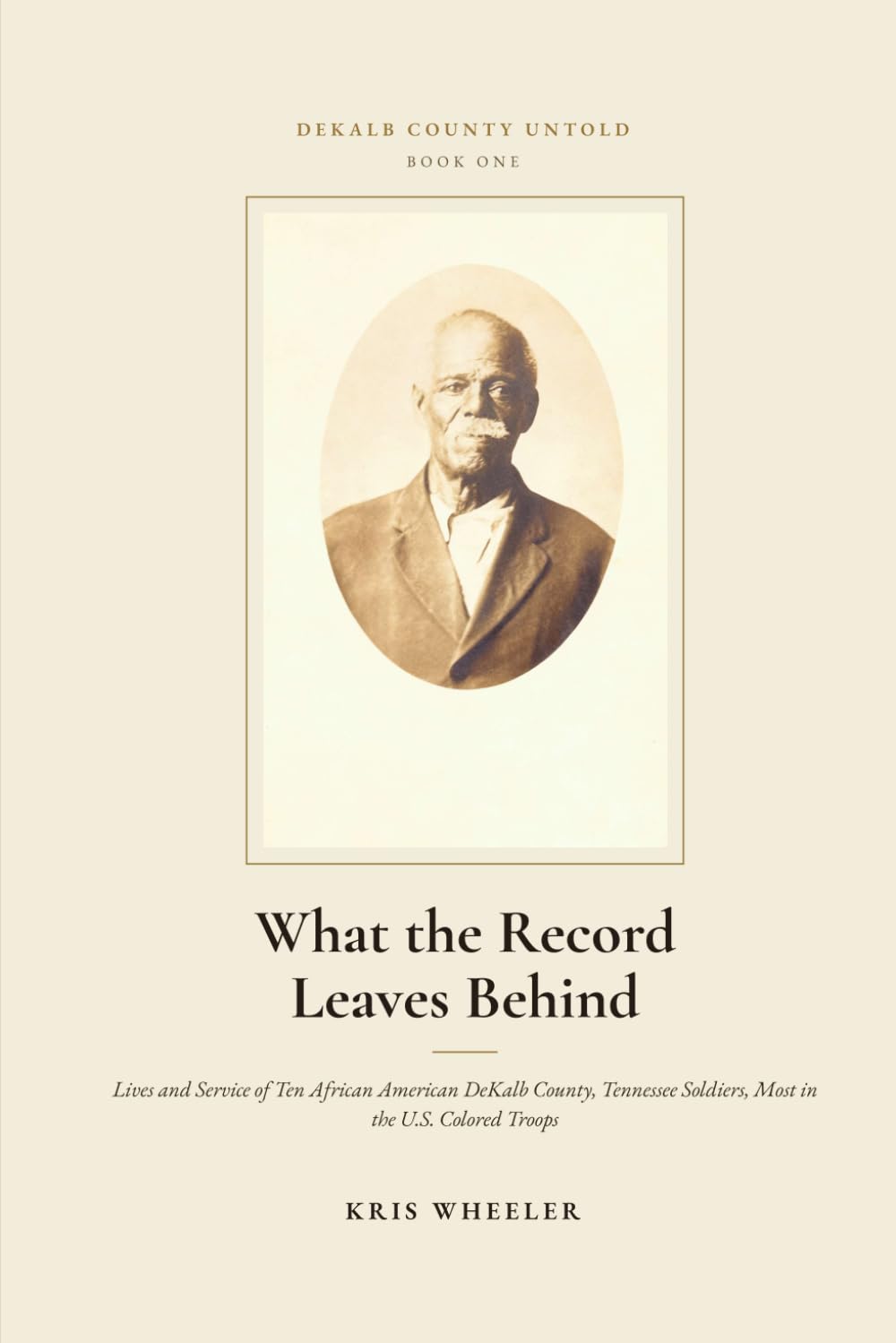
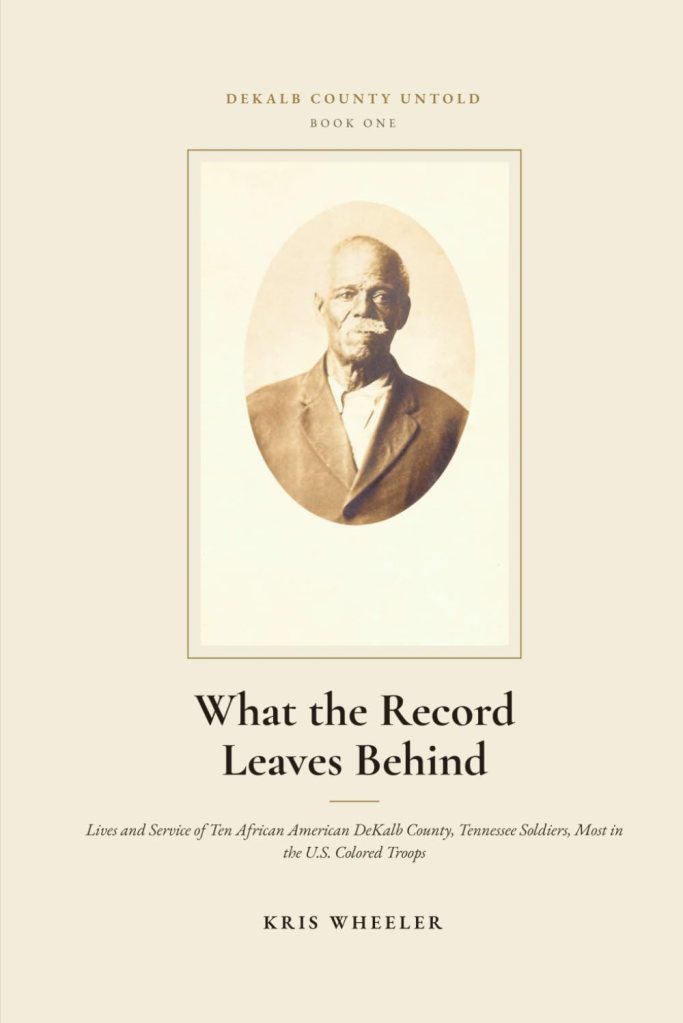
DeKalb County Untold, Volume 1 — now available
A Civil War pension file isn’t supposed to be a biography. It’s a government form, filled out by a clerk, meant to answer one narrow bureaucratic question: does this man deserve a monthly check, and how much? Nobody writing those forms in 1888 or 1896 or 1905 was trying to preserve anything. They were trying to close a case.
And yet.
Read enough of them, really read them, every affidavit, every surgeon’s certificate, every scrap of testimony a neighbor gave under oath, and you start to see what the record leaves behind anyway. A man’s height to the half-inch. The name of the creek he was born near. The exact words his wife used to describe a marriage no courthouse ever recorded because the law wouldn’t let two enslaved people marry. A rumor about how he died, traced forty years later to the one soldier who started it.
That’s what this book is. Ten Civil War pension files, some as short as twenty-one pages, one running to five hundred and ninety-nine, and turned into the stories they were always quietly telling. Every man in it was from the DeKalb County, Tennessee area, or tied to it by marriage, enslavement, or wartime friendship. Most served in the United States Colored Troops. All of them were, at one point in their lives, somebody’s property, and all of them walked into a Union recruiting station anyway.
Ten men, ten files, one county
Jefferson Lawrence’s file alone runs nearly six hundred pages, because the government spent over twenty years arguing with itself about whether a man discharged for a sexually transmitted disease contracted during honorable service could be honorably discharged at all. It took a direct Congressional inquiry, filed the day before his claim was finally reopened, to settle it.
Martin Van Buren Allen’s file holds something rarer: a full 1882 Special Examination, thirteen sworn depositions taken from people who had known him since before the war, amounting to an oral history of an enslaved family’s life that no census or plantation ledger would ever have bothered to record. It also holds an unresolved mystery his own widow and his own army record can’t agree on: did he die of disease in a Chattanooga hospital, or was he killed in battle at Nashville, as the story that reached home insisted for decades?
Monroe Pharris’s file is the hardest one in the book. He went insane and died at Nashville’s Central Hospital for the Insane in 1893, and the Special Examiner who investigated his widow’s claim five years later had to reconstruct the birth and death dates of their six children, including twins who died within weeks of each other in 1896, out of a country doctor’s billing ledger and an undertaker’s account book, because no one had ever written the dates down anywhere official.
And then there’s the quieter discovery that reshapes how you read every other file in this project: Henderson Smith and John New, both formerly enslaved men from Wilson County, both served in the 5th Tennessee Volunteer Cavalry, a regiment with a number, not a “Colored” designation, the kind of unit a researcher might skim past assuming it was white. It wasn’t, not entirely. The record says otherwise, if you’re willing to read all the way through it.
There’s also Mack Berry, whose marriage while enslaved was never civilly recorded and whose own war service the government could never quite confirm, no matter how many times his widow asked them to look again. Stephen Brown, wounded at the Battle of Nashville, whose second wife’s name appears seven different ways across the file, Nelia, Cornelia, Nellie, Melia, Melie, Julie, Cordelia, all the same woman, all equally true.
Richard Williams, who spent decades known in his own community by a name that wasn’t his. Lewis Young, whose widow’s claim was rejected on the strength of a single Treasury Department payment record that contradicted everyone who swore he was already dead. And John New, whose family’s own Bible record, and a correction affidavit filed thirty-five years after the fact, settled a one-year discrepancy that could otherwise have cost his widow her pension.
Why this book exists
I started this project the way most of my genealogy work starts. chasing one name, for one family, through one file. What I found, file after file, was that these records don’t just answer the question they were created to answer. They answer questions nobody thought to ask at the time: who was this man before the war, who did he love, who did he lose, and what did his community say about him when it mattered.
What the Record Leaves Behind collects all ten of those stories into one volume, full transcriptions, full context, and an honest accounting of every place the records contradict themselves, because a good family history doesn’t smooth those over. It flags them and lets you draw your own conclusions, the same way I had to.
If you’ve got DeKalb, Wilson, Smith, or Cannon County roots, Black or white, there’s a real chance one of these ten men crosses paths with your own family somewhere in these pages. Even if he doesn’t, this is what it actually looked like for a formerly enslaved Tennessean to fight a war, come home, and then spend the rest of his life fighting a different kind of battle just to be believed.
Get the book
What the Record Leaves Behind: DeKalb County Untold, Volume 1 is available now at Junk N Jewell’s in Alexandria or through Amazon in Paperback or Hardcover.
Every dollar from this project goes right back into preserving the Seay Chapel and Alexandria’s Historic Cemeteries District, after we recoup the remaining $380 in research costs (which will go into future pension file requests).


Leave a Reply