It started a few years ago, when Ria and I first fell into talking about Alexandria’s history—the kind of conversation that begins as “someone should do something” and quietly turns into “I guess that someone is us.”

This year it stopped being an idea and became my everyday. I’ve spent more hours than I can count(and hundreds more still to come) with the people of Seay Chapel Cemetery, Alexandria’s Black cemetery, on my screen, in my notebooks, and in my heart. Census records, scraps of newsprint, Civil War files, family connections; name after name after name. I’ve learned their stories, their sufferings, their joys, and I feel watched over by the souls who rest on that hill. Every time I find another child lost to consumption, rickets, pneumonia, things that should never have the last word, my heart drops and I feel the pain of a life lost too soon. And yet when I walk up that little lane behind the church and step onto those hallowed grounds, there is peace. The kind of quiet you only get when you’re having a conversation with tombstones and they know you’re listening.

About two weeks ago, Melanie Nistad picked me up early on a Saturday and off we went to a workshop on how to repair tombstones. We were a little nervous, expecting surprises or complicated techniques, but it turned out we actually understood the assignment, and it was easier than we’d both built it up to be. By the time we drove home we had a list: tools, supplies, a plan. Frank(Melanie’s husband) dove in headfirst, watched every video he could find, and then just casually built us a tripod with a pulley system so we can lift the heavier stones safely, and ordered every thing needed. That’s the level of commitment we’re talking about here.
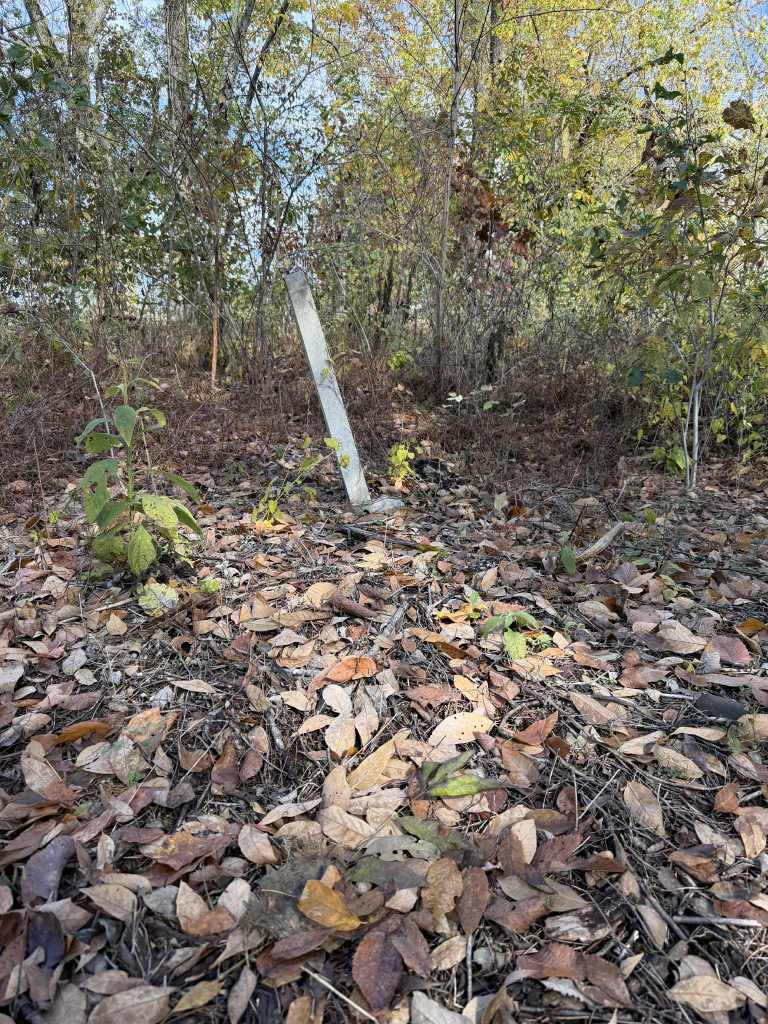
Last Sunday afternoon, Ria and I met three beautiful humans with family buried at Seay Chapel. We stood there together, surrounded by history, tombstones, and resilance, and I listened. They told me about the strawberries that once grew there, not wild ones, but the kind someone loved enough to plant. They explained how, after about 150 years of use, they knew the cemetery was full because when they dug a grave, they would sometimes meet someone already resting there and have to try another place. MTSU estimates around 500 burials, done using dowsing rods. One day, I hope we’ll be able to bring in ground-penetrating radar, but for now that dream is buried under the overgrowth. So many of the fieldstones that once marked graves have been moved or lost; you only know where some are by the sunken earth, the lucky surviving stones, or the field rock that somehow hasn’t been moved aside.

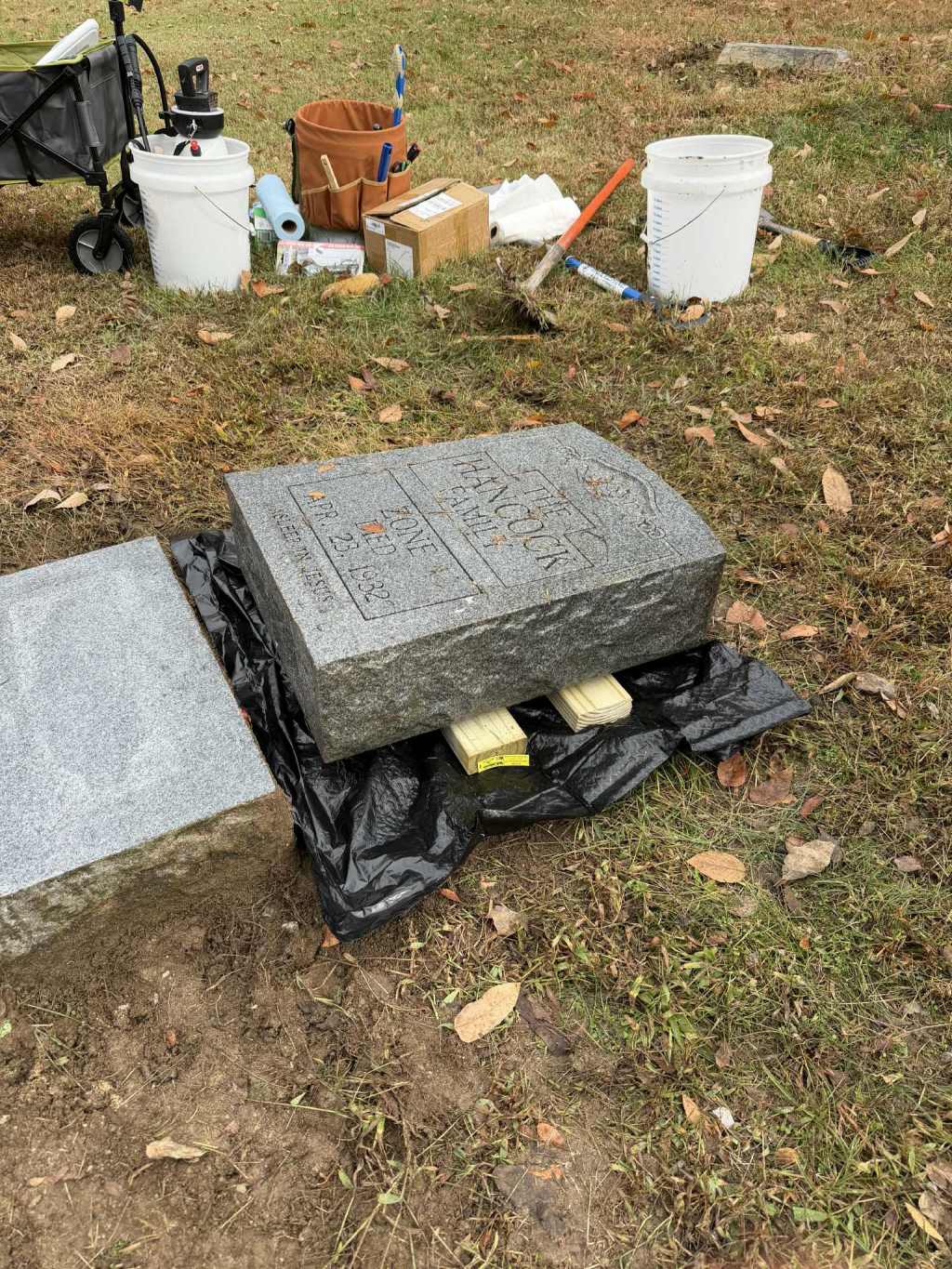
Today, Melanie, Frank, and I went back. In just a few hours, we cleaned about a dozen stones with approved cleaner, knowing the sun and rain over the next few months will keep working their slow magic. But the real joy? We were able to do major repairs on three stones: Zone Hancock, Rev. Thomas Belcher, and Henrietta Gordon. Their markers are standing stronger tonight than they have in years, and I’ve shared their biographies below so their lives are not just names in stone.
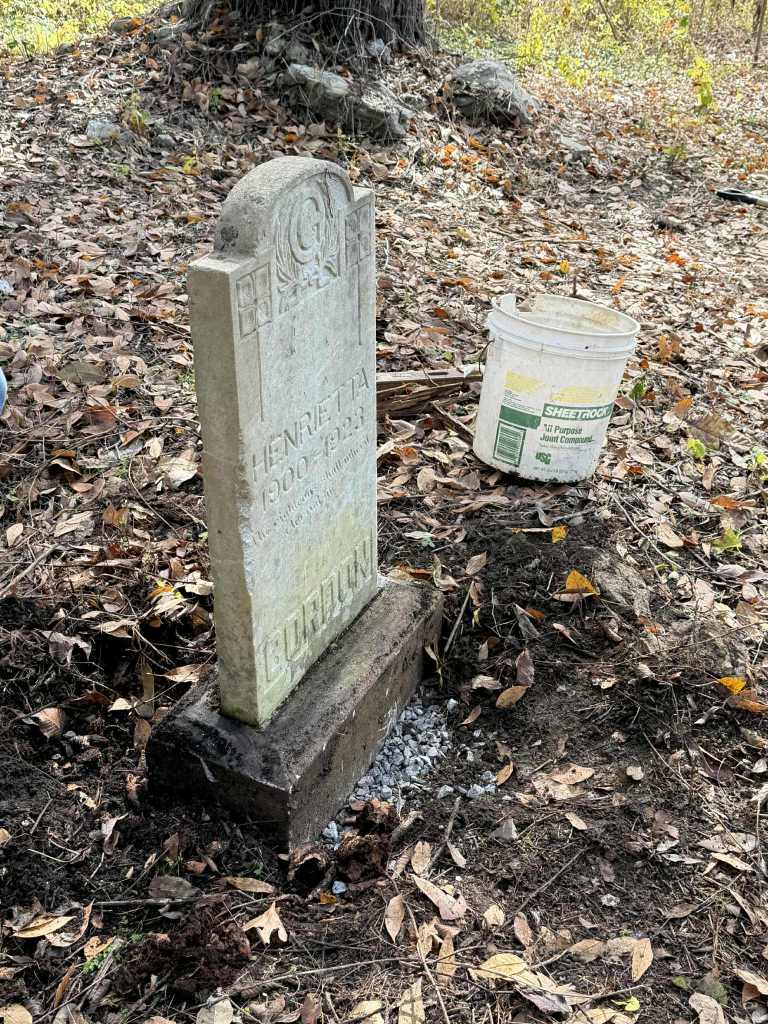
We also met our limits. We found bases filled with concrete we aren’t yet confident removing safely. We saw just how much fill dirt is needed to support sunken graves before we can raise the stones. We felt where brute strength is still missing, places where we can’t safely lift or shift what needs to move even without the fill and 2nd sent of strong hands. But for two and a half hours of work, we walked away proud. We did good.

There is a portion of the cemetery where the grass is cut, the stones are reachable, and you can see how beautiful Seay Chapel truly is. But so much of that sacred ground is buried under saplings, thorny growth, and tangles that make it nearly impossible to work, to find, to honor. This is where we need our people.
We need help.
We need tools.
We need dirt for fill.
We need gravel to stabilize the stones.
We need proper cleaner (D/2 or Endurance).
We need the folks with strong backs and kind hearts—the ones with weed-eaters, hedge trimmers, chainsaws, and a couple of free hours—to help push the wilderness back so we can reach the graves that have been forgotten too long.
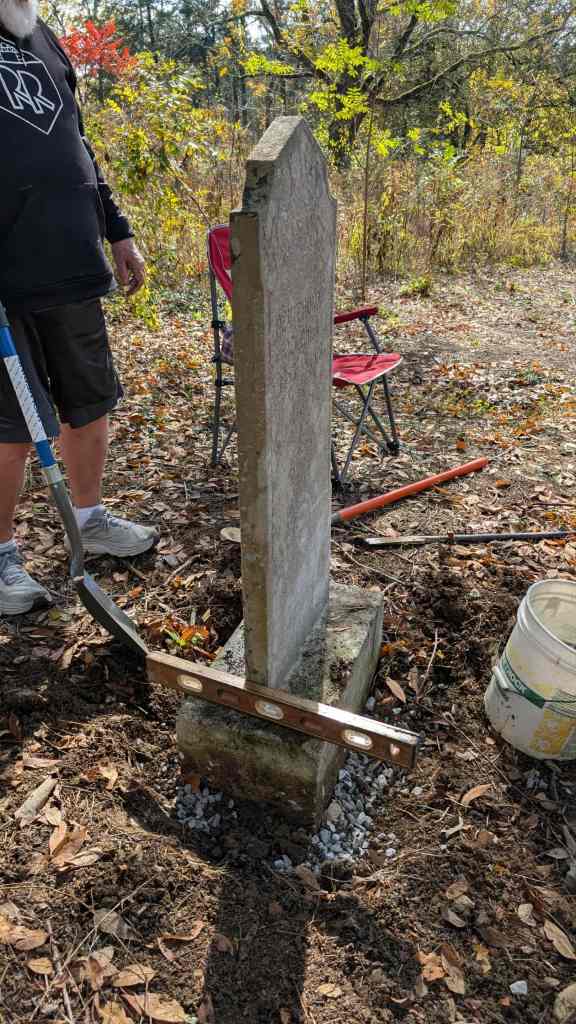
We now have the tripod and pulley to do this safely. The plan is to organize a big workday in March. My hope—my very stubborn, determined hope—is that when that day comes, we won’t be standing there alone. If some of the clearing can be done ahead of time, we can make that day count in a big way.
Tonight, I’m tired in the best kind of way. I’m smiling because the three of us proved that three people, a tripod, and a slightly unreasonable level of dedication to the dead can absolutely make a difference. We exceeded what we thought we’d get done. We justified every hour we’ve poured into this “crazy idea” because today it wasn’t just an idea—it was visible, measurable respect.
If you’re interested in helping today, we invite you to stop by and do some brush clearing, as the prep work done now will help in the spring.
If you’re interested in helping, swinging a trimmer, lending your muscles, or arranging for a donated load of dirt or gravel to be dropped at Seay Chapel in March, please reach out. We can’t change the past, but we can damn sure honor it.

REV. THOMAS P. BELCHER PASSES AWAY
Rev. Thos. P. Belcher, probably the most widely known minister of the colored race in this entire section died in Alexandria Sunday night, following a few days’ illness with pneumonia.
He was one of the “old before the war” darkies and a man who wielded a great influence over his race for good and who commanded the esteem and respect of the white people with whome he came in contact.
He was about 68 years of age and had been a Methodist preacher since early manhood.
Tom Belcher was a familiar figure about Alexandria. Posessed with a rich and mellow voice, his singing as well as his preaching, often attracted many of his white friends. He was hoenst, frineldy, charitable as his means would allow, a hard worker and a Christian.
He died preaching and singing the praises of his Lord, the spark of life leaivng[leaving] him just as he closed the song “There’s NOt a Friend Like Jesus. No Not One.”
Scors of white people visted the home of the good colored man before his death and yesterday mingled with the colored people were many of the deceased’s white friends, including several business men.
Floral offerings were sent by both white and colored. The remains were buried here yesterday.
Zone Lyon: Zone Lyons was born in Tennessee about June of 1880 to Alford Lyons[1] and Elizabeth Bettie Hancock.
1900 finds her district 1 in DeKalb County, Tennessee[2] where in the home were Bettie Lyons(40 head), Zone Lyons(9 daughter), John Lyons(7 son), Buck Lyons(6 son), Queen Lyons(4 daughter), Anderson Lysons(2 son), Cora Lyons(1 daughter), and Elizabeth Lyons(9 niece).
She would marry James Edward Hancock (1880-1956) on the 28th of August, 1904 in Cannon County, Tennessee[3]and they would have:
- John Grady Hancock(1907-1965)[4][5]
- Wiley Hancock(1908-1977)[4][5][6]
- Mina Jane Hancock(1909-aft 1977)[5]
- Ive Nellie M Hancock Hickman Simmons(1913-1970)[4][5][7]
- Jim Ed Mack Hancock(1915-1976)[5][8]
- Walter Hancock(1918-1980)[5][8]
- Bonnie Willie Hancock (1919-1934)[5][8][9]
- Robert Love Hancock (1926-1944)[8]
1910 finds them in District 1 in DeKalb County, Tennessee on Coon Branch[4] Zone confirmed she had 3 children and they were all living. In the home were Bettie Lyons(54 head), Anderson Lysons(17 son), Cora Lyons(12 daughter), James Hancock(19 son-in-law), Zone Hancock(18 daughter), John Hancock(4 Grandson), Miny Hancock(3 granddaughter), and Wily Hancock(1 grandson).
1920 finds them on Green Hill Road in District 3 in DeKalb where she was working as a Laundress[5]. In the home were Jim Hancock(30 head), Jane Hancock(33 Wife), Grady Hancock(14 son), Winnie Hancock(13 daughter), Willie Hancock(10 son), Nellie May Hancock(8 daughtrer), Ina Nell Hancock(6 daughtr), Jim Hancock(4 son), Walter Hanock(2 son), and Willie Lee Hancock(0 daughter).
1930 finds them in District 13 in Wilson County, Tennessee[8] they were on Alexandria and Mooreberry Road in District 13 in DeKalb County, Tennessee. in the home were Jim Hancock(50 head), Zona Hancock(38 wife), Ed Hancock(15 son), Walter Hanock(9 daughter), Robert Hancock(3 son), Nellie Hancock(17 daughter), Andrew Hickman(37 son in law), and Margie M Hickman(2 granddaughter).
She died on the 23rd of April, 1932 in Watertown, Wilson County, Tennessee[1] and would be buried in the Seay Chapel Cemetery in Alexandria, Tennessee
Henrietta Gordon was born on the 10th of June, 1900[1] in Cookeville, Putnam County, Tennessee[1] to Phil Gordon[1] and Georgia Tubbs[1]. She would not marry, nor have children.
She died in Center, Marion County, Indianapolis on the 20th of June, 1923[1] and would be buried in the Seay Chapel Cemetery in Alexandria, DeKalb County, Tennessee[2

 Alexandria Historic Cemeteries District
Leave a reply to chmjr2 Cancel reply